
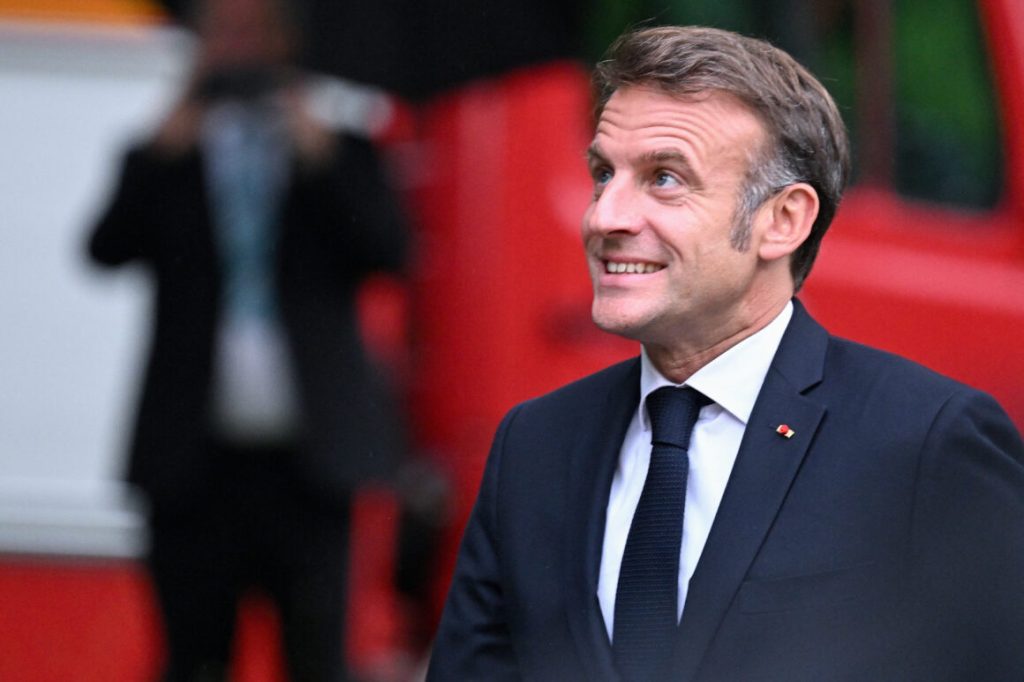
In MEI Perspectives 47, I discuss the significance of France’s decision to recognise a Palestinian state, and how these reverberations are meant not only for Europe, but also further abroad. This policy announcement also comes at a critical juncture as Israel intends to expand its military occupation.
***************************
In early 2017, former French President François Hollande made a U-turn after launching a diplomatic offensive in the form of the “Conference for Peace in the Middle East”. The summit, featuring representatives from 70 countries and organisations, was aimed at jump-starting the moribund Palestinian peace process by reiterating the Two-State Solution. Internationally, the French-led effort had little impact as both the Israeli and Palestinian Authority leaders, Benjamin Netanyahu and Mahmoud Abbas, were absent.
As a result, when faced with pressure from 154 parliamentarians urging him to honour his commitment to the recognition of Palestinian statehood, the former president said “a unilateral recognition of the Palestinian state by France would not today have the desired ripple effect on our partners”.
Eight years later, with Emmanuel Macron helming the Elysée Palace, France’s latest decision to take a stand on Palestinian statehood — the first G7 nation to do so — may result in the kind of reverberations that his predecessor had intended. Israel’s international isolation in Europe and elsewhere is deepening, and Mr Netanyahu’s plan to fully occupy Gaza is likely to raise more hackles.
The French Calculus at Home and in Europe
Mr Macron’s decision was not a bolt from the blue, but rides on a wave of global frustration with Israel’s intransigent policies in Gaza. As recently as 21 July, the foreign ministers of 31 countries ranging from the United Kingdom to Japan and New Zealand signed a joint statement calling for an end to the Gaza war. But the French president was stirred much earlier, when he visited Al-Arish city in Egypt in April, during which he witnessed, first-hand, the mounting humanitarian crisis facing Gazans. French officials later sketched out a roadmap for a Palestinian state, which Israel reportedly lobbied intensely against. France’s frustration was compounded by Israel’s bombing of Beirut’s southern suburbs in March, rupturing a ceasefire with Hezbollah, which Paris had helped broker last November.
Mr Macron’s decision to recognise Palestinian statehood also reflects growing public pressure in France. In June, protests erupted in cities across the country shortly after Israel began its assault on Iran. Thousands also marched that same month, during the Paris Air Show, over the presence of Israeli defence companies at the event, even though the government had decided to shutter their booths. Even in Dieulefit, a little-known south-eastern French town, pro-Palestinian activists waved flags as the Tour de France peloton rode through.
The French initiative to take the lead on the issue was also aimed at sparking some action from its European neighbours. At a press conference in late May ahead of the Shangri-La Dialogue in Singapore, Mr Macron said that Europe’s “collective position” on Israel must “harden” unless the humanitarian crisis in Gaza improves, and reaffirmed that recognition of a Palestinian state is a “moral duty”, and a “political necessity”. But while there has been caution in Europe about following suit, the pressure on Israel is mounting.
Will Europe Budge?
The reality is that it was always going to be difficult for Europe to agree on Israel, although the fact that Mr Macron buckled down has sparked some knock-on effects. Following France’s pledge, British Prime Minister Keir Starmer faced immense domestic pressure from his MPs and former diplomats to follow suit, and he responded by saying the UK would follow unless the humanitarian situation in Gaza improves, a ceasefire is agreed to, and the Two-State Solution is revived — the last of which is the most improbable from an Israeli perspective.
Others have adopted targeted reprimands. The Netherlands has barred Israeli right-wing ministers Bezalel Smotrich and Itamar Ben-Gvir from entering the country, after its counter-terrorism agency designated Israel as a foreign security threat earlier this month. Slovenia, which already recognised a Palestinian state in June 2024, has now erected an arms embargo on Israel — a first in Europe.
There nonetheless remains resistance among some European states against publicly condemning Israel, or rethinking their recognition of Palestinian statehood. German Chancellor Friedrich Merz, for instance, while increasingly critical of Israel in recent months, has so far refused to sign off on a proposal penalising Mr Netanyahu’s government. Berlin also toned down previous comments that Germany could respond to any unilateral Israeli actions with recognition of a Palestinian state, adding that no such move was imminent. Likewise, the Czech Republic, another longtime ally of Israel, criticised the humanitarian catastrophe in Gaza, but added that the relocation of its embassy from Tel Aviv to Jerusalem is a matter of “not if, but when”.
Other European governments — the most right-wing of which are Hungary and Italy — have not changed tack either. Budapest went as far as inviting Mr Netanyahu for an official visit in April, during which Hungary officially withdrew from the International Criminal Court, which issued warrant of arrest against the Israeli leader. As for Italy, Prime Minister Giorgia Meloni, while reiterating the need to “respect international law”, said she is “not in favour of recognising it (a Palestinian state) prior to establishing it”.
Further Abroad and in Gaza
While the French action was unevenly received in Europe, its reach has certainly extended well outside the continent. Canada has joined France and the UK in its plans to recognise a Palestinian state at September’s UN General Assembly, adding that the Palestinian Authority (PA) must hold an election in 2026, and commit to reforms. In Australia, Prime Minister Anthony Albanese has taken his cue from Canada, by saying that conditions (the demilitarisation of Palestine, reform of the PA, and the exit of Hamas from administration) must be met before Canberra is willing to follow suit. His words were followed by a public reaction as tens of thousands turned up at the Sydney Harbour Bridge on 3 August for a pro-Palestinian protest.
As the previously silent majority awakens against Israel, the US has also leaned against its ally, albeit mildly. After President Donald Trump acknowledged that there was “real starvation” in Gaza, his officials made their way to the Strip to inspect aid distribution sites. Israel then started allowing airdrops, and military pauses, to get more help into the territory. Nevertheless, the United Nations’ humanitarian chief, Tom Fletcher, told the BBC that the latest deliveries constitute a “drop in the ocean”, and that aid is needed at a “much greater scale”.
Is the Momentum Enough to Revive the Two-state Solution?
France’s decision to recognise a Palestinian state ran in tandem with its co-chairing of a high-level UN conference with Saudi Arabia from 28-30 July in a bid to revive stalled two-state talks between Israelis and Palestinians. The meeting, originally planned for June, was postponed due to the Israel-Iran war. What seemed destined for irrelevance has now been given a fresh lease of life with Mr Macron’s announcement, and the positive reception to it by Arab states, particularly Saudi Arabia, which once led the charge with the Arab Peace Initiative (API) in 2002. Back then, the 22 members of the Arab League called for normalising relations with Israel on condition that a viable Palestinian state be established. But while France’s action has returned Palestinian statehood to the headlines, the reality is that it is further away from being realised than it was over two decades ago.
The US, the only power with the gravitas to bring a decisive swing to the issue, is disinterested in anything more than a ceasefire. While Maga standard-bearers like Congresswoman Marjorie Taylor-Greene have gone further in expressing alarm about events in Gaza (she called it “genocide”), others — notably the US Ambassador to Israel, Mike Huckabee — have expressed derision over Mr Macron’s actions. Meanwhile, it is difficult to see how Mr Netanyahu’s government — the most right-wing in Israel’s history — would even entertain the possibility of a Palestinian entity.
Equally challenging are questions over the borders of a Palestinian state and a reformed leadership, although Hamas’ latest statement that it may disarm if a Palestinian state is established may be a glimmer of hope — or another ruse. The call for Hamas to lay down its weapons has been echoed by Arab states at the same UN conference which issued the “New York Declaration” urging Israel to commit to a Palestinian state.
What is evident so far is that the French decision has attempted to look beyond myopia as the world is stirring against Israel. More importantly, with international law and a rules-based order in jeopardy, Mr Macron is taking a stand where Israel and the Trump Administration are seemingly operating without limits. Mr Trump ridiculed Mr Macron’s plans by saying “what he says doesn’t matter”. The rest of the world, which is already alternating between appeasing the US and attempting to forge better relationships with like-minded partners as the global trading system unravels, may yet find common cause on another issue — one which their domestic constituencies have an increasingly shrill opinion on.
 Dr. Clemens Chay